
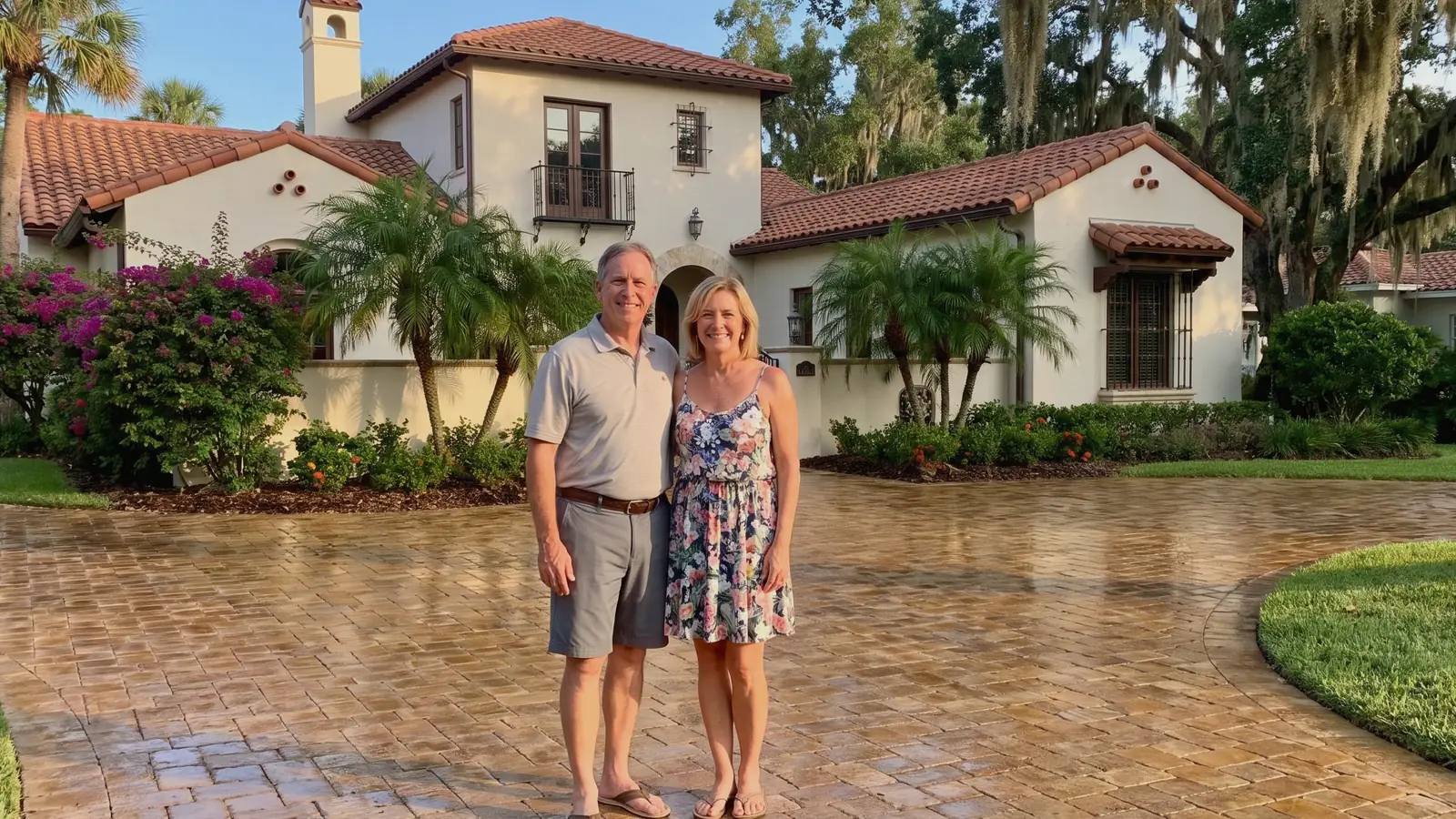
Paver sealing for Lakewood Ranch homes
Paver Sealing in Lakewood Ranch, FL
Lakewood Ranch homes built since the 1990s can get a free paver sealing estimate when you call (941) 207-3213.
- Brings out deeper paver color
- Fresh joint sand helps lock pavers in place
- Gives weeds less room to grow
- Makes the surface easier to keep clean
- Free estimate, no obligation
Request a Free Estimate
Free, no obligation.
Fast, careful paver sealing in Lakewood Ranch
Paver sealing is available in Lakewood Ranch, from the villages near Main Street to the homes along the Braden River. Local contractors wash, re-sand and seal driveways, lanai floors and pool decks here, and the first estimate is free. Call (941) 207-3213, and an answer reaches you within 1 business day, usually much sooner.
Picture a chalky, faded driveway with thin joints, the kind a front walk shows from the street. A wash, fresh sand and an even coat give it a single, rich color again. Or ask for a free estimate and send a short note about the driveway, walkway or pool deck.
The 2020 census found 14,884 households in Lakewood Ranch, spread across Manatee and Sarasota counties, so driveways of every age sit side by side. A first coat on a newer drive is a simple job, and a reseal takes a bit more. To learn which you need, ask for a free estimate.
Why hire a local paver sealing contractor in Lakewood Ranch?
Lakewood Ranch homeowners tend to pick a local paver contractor because homes here span nearly three decades of building. A contractor who works the villages knows which driveways are due. To hear what that means for yours, call (941) 207-3213.
A no-charge look
Before you decide, the contractor looks over your Lakewood Ranch drive, lanai and pool deck and gives you a price.
A band to hold bids against
Regional companies publish $1.50 to $3.00 per square foot. Check any Lakewood Ranch bid against it.
Finish and sand tone
Choose matte or wet look, and match the joint sand to the tone already in your drive.
Decide on your terms
You pick the day and the finish, or you decline. A Lakewood Ranch estimate carries no obligation.
Get Your Free Estimate in Lakewood Ranch
Tell us about your pavers in Lakewood Ranch.
Free, no obligation
What paver problems show up most in Lakewood Ranch?
A first coat that is overdue or a second that is due
Lakewood Ranch was built in stages. Summerfield, the first neighborhood, was completed in 1995, and newer villages followed. So one driveway may need its first seal while another needs a reseal. A Lakewood Ranch company says most pavers benefit from resealing every two to three years, depending on exposure and wear. The home's age is the first thing a contractor asks, because it tells them what coat history to expect. A newer driveway that has never been sealed is the easier job. Lakewood Ranch homes built in the 1990s and 2000s may each be on a second or third coat. Ask the contractor what they see on the first walk and what that suggests.
Weeds and shifting in open joints
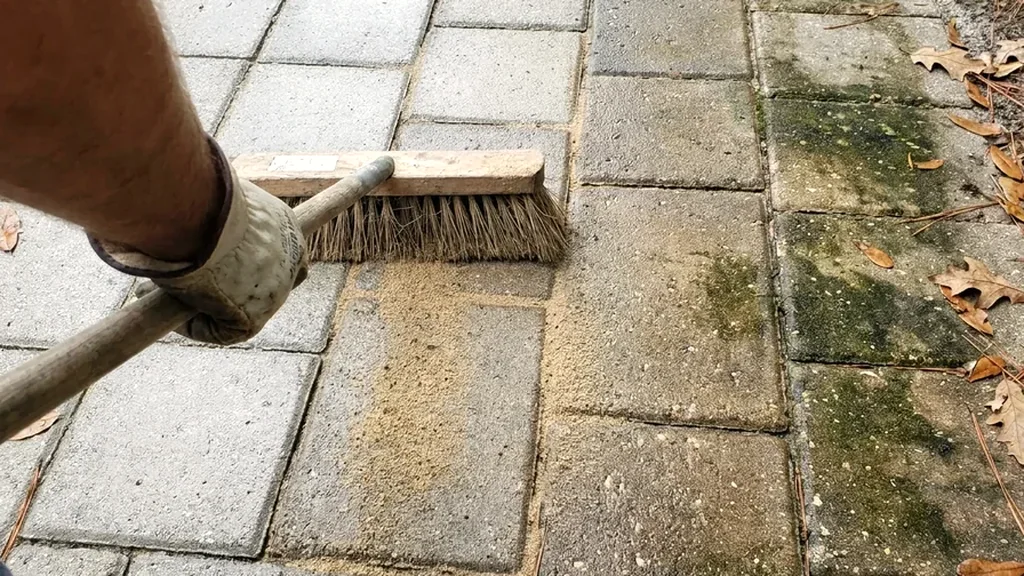
Joint sand washes out in rainy season storms, and gaps widen. A landscape industry guide says weeds point to lost joint sand. A Lakewood Ranch company says sealing stabilizes the sand, which cuts weed growth and shifting. Fresh sand is added after washing and ahead of the coat. Gaps that open at the driveway edge also let soil settle in, which feeds the weeds. Ask the contractor how the joints will be cleaned before sand goes back in. A weedy joint at the garage apron is the first place most owners notice.
Sun fade on wide, open drives
Highs run from the upper 80s to the middle 90s in the Southwest Florida rainy season. A Sarasota County paver company says Florida's UV and humidity are hard on sealer. A wide driveway with no shade gets the full dose. Color goes chalky first where the sun hits longest. Sealer helps hold the color, but nothing stops the sun, so plan for a reseal on the schedule above. If your drive faces west, the fade tends to show on that side first. The edge of the driveway nearest the street often fades first.
Damp and shaded edges near preserves and river
The community keeps about 46 percent of its land as conservation and parks, and the Braden River runs through the south. A lot beside that kind of land may stay shaded and damp. Algae grows on pavers mainly where shade is heavy and the surface stays wet. Cleaning comes first. Debris sitting in the joints keeps the surface damp. The Braden River is a tidal estuary in its last 6 miles, so lots near the lower river can stay wet. A walk at dusk shows damp spots that stay dark long after a storm.
Joint sand that no longer matches
Joint sand comes in colors, and a Bradenton paver company offers six of them. After years of sun and washing, the original sand fades or leaves. New sand in a different shade can look patchy. Ask the contractor to match the tone that is already in your joints. A quick test patch of new sand in a joint shows whether the color blends. Matching matters most along the driveway apron, where the street sees it. A sample of sand in a jar is a quick way to compare tones.
Do older and newer parts of Lakewood Ranch need different paver sealing?
Yes, because the community was built in waves and pavers age at different speeds. Summerfield, the first neighborhood, was finished in 1995, so its driveways are among the oldest. Newer villages are younger, and many still need a first proper seal. Name your village when you ask for a free estimate.
Lakewood Ranch runs from State Road 64 down to Fruitville Road, with Interstate 75 on the west edge. A Stewardship District and five community development districts plan and maintain community-wide infrastructure. The pavers on your lot are still yours to keep up. To talk it through, call (941) 207-3213.
The community lists town centers, Lakewood Ranch Medical Center, Premier Sports Campus and Sarasota Polo Club, with more than 150 miles of trails, so many neighbors walk past. A faded driveway shows. A clean, even surface gives a good first impression. If yours needs help, ask for a free estimate.
The Stewardship District covers 23,055 acres in Manatee and Sarasota counties, and five community development districts sit inside it. Those districts handle community-wide infrastructure, while the paver surface at your door is yours to care for. If you want a second opinion on yours, ask for a free estimate.
Lakewood Ranch counted 34,877 people in 2020 and covers 47.1 square miles, 2 percent of it water. The census found 14,884 households and 17,319 housing units, 14.1 percent of them vacant, and 79.8 percent of residents had lived in the same house a year earlier. The community's own history page says about 46 percent of the land is preserved for conservation and parks. To plan work around your own calendar, call (941) 207-3213.
What does paver sealing cost in Lakewood Ranch?
Sealing in Lakewood Ranch is priced by the square foot, and companies in the region commonly publish $1.50 to $3.00 to clean, sand and seal. A wide driveway with a lanai adds up faster than a short walk. Faded sealer and weedy joints add work inside that range. For a price on yours, ask for a free estimate.
Access and age also matter. An open driveway is simpler than a tight side yard, and a newer paver that was never sealed is simpler than one with failed coats. Wondering which of these fit your lot? Call (941) 207-3213 and the contractor can say.
| Paved area | Typical example | Clean, sand and seal |
|---|---|---|
| 300 sq ft | Small patio or walkway | $450 to $900 |
| 600 sq ft | Two car driveway | $900 to $1,800 |
| 1,000 sq ft | Large driveway or pool deck | $1,500 to $3,000 |
| 1,500 sq ft | Driveway plus pool deck | $2,250 to $4,500 |
Math based on the $1.50 to $3.00 per square foot that Southwest Florida paver companies publish. Your contractor sets the actual price after seeing the surface. Repairs, leveling and stripping failed sealer are usually extra.
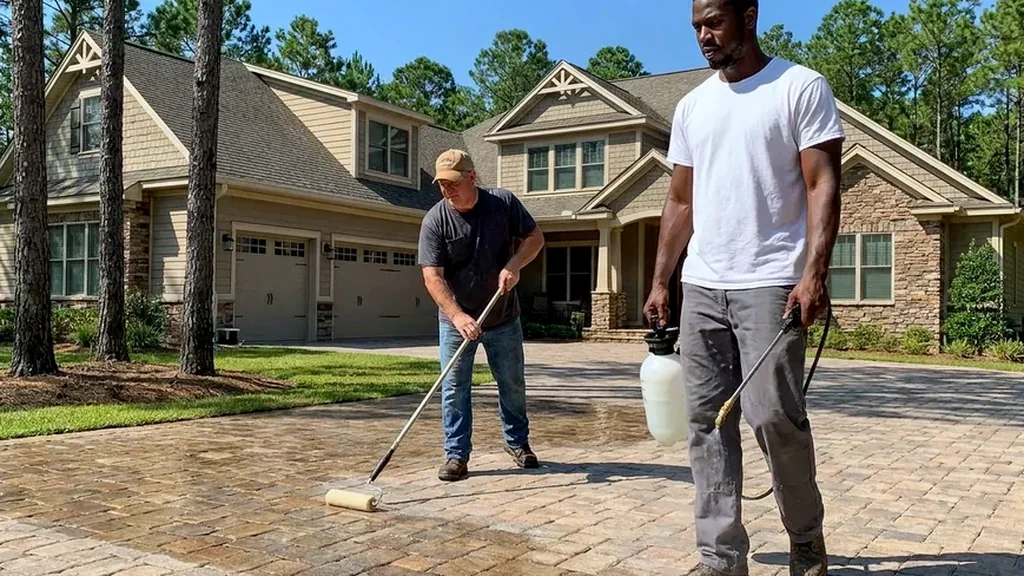
How does a paver sealing job work in Lakewood Ranch?
Learn the home's age and the old coat
The contractor looks at every paver surface and asks when the home was built, because a first seal is simpler than a reseal. A test patch shows what kind of coat is down. Failed sealer is stripped first, as a Bradenton company also notes. Photos of the surface help the quote and your records.
Wash dirt, algae and rust
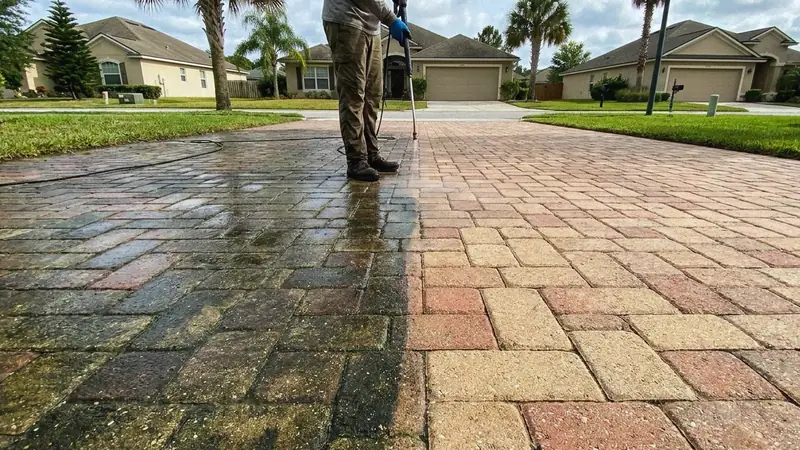
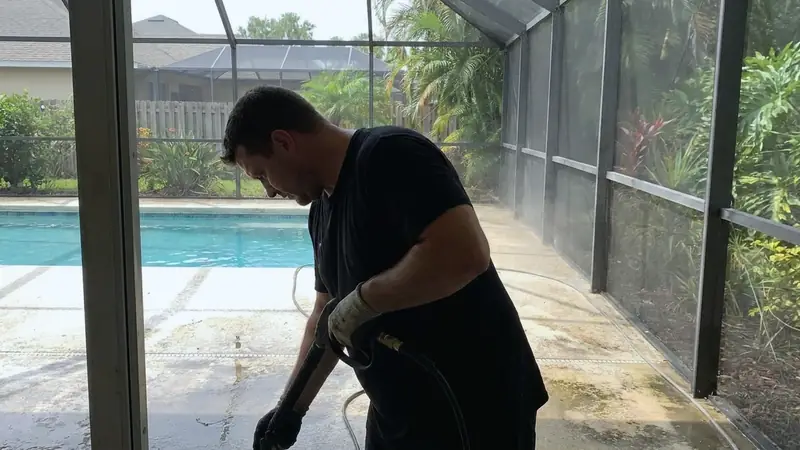
Cleaning removes algae from shaded edges, grime from the wheel paths and orange streaks near sprinklers. Rust gets treated here, ahead of the sealer. Washing also strips joint sand, so sand goes back next. The wash is also where weeds in the joints are cleared out.
Refill with matching sand
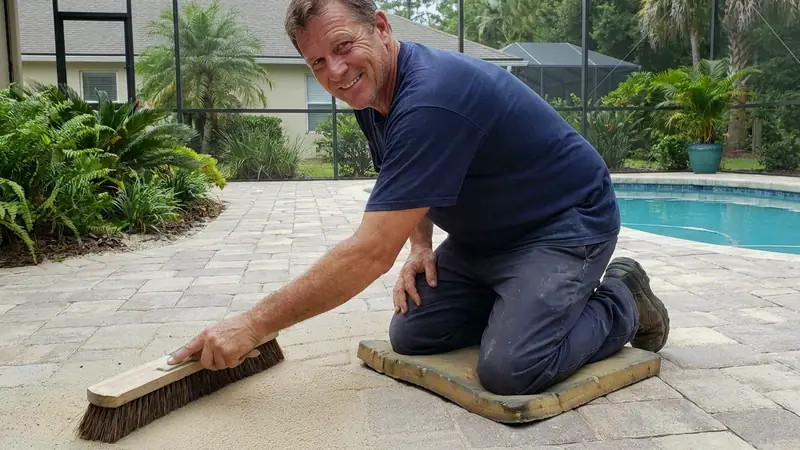
Fresh sand goes in joint by joint, followed by a sweep. Joint sand comes in several tones, so the contractor matches what is already in yours. Then the pavers dry fully before any sealer opens. Sand tone is a small detail that changes how even the surface looks.
Coats, thin and even
The sealer goes on thin, with edges and joints treated like the middle of the drive. You choose matte or glossy wet look. Newer pavers that were never sealed are the simplest case. Edges near the garage door and the street get a second look.
Cure and take a last look
A final walk with the contractor confirms the result. Ask when sprinklers and parked cars can return, since cure times depend on the weather that week.
Complete paver services in Lakewood Ranch
A Lakewood Ranch job runs in a set order: wash, sand, dry, seal. The wash lifts dirt and algae, then fresh sand fills the joints. Sealer waits for dry pavers so nothing is trapped under it. To ask how long each stage takes on your lot, call (941) 207-3213.
Wide driveways, lanai floors and pool decks are the usual surfaces in these villages. Open drives fade first because they take the most sun, while lanais stay damp under screens. Say which surface looks worst when you ask for a free estimate, and the plan can start there.
Two choices shape the sealer, the base and the look. An existing coat narrows the pick, so the contractor identifies it first, and failed sealer is stripped. Matte is subtle, and a glossy wet look gives deeper color. Ask for the brand and the sand color when you ask for a free estimate.
Weather sets the schedule. Dry pavers are a must for sealing, and the rainy season, May 15 to October 15, brings highs in the upper 80s to middle 90s. The contractor picks a dry morning and names a backup day. Call (941) 207-3213 to pick a window.
Questions to ask before you hire
- Do you pressure wash with a surface cleaner or a wand, and will it chip my joint sand?
- Is the sealer water based or solvent based, and why that one for my pavers?
- Will you cover my lanai furniture, plants and landscape lights before spraying?
- Will the written estimate name the sealer brand and the price per square foot?
- Do you check for afternoon thunderstorms before you start the sealing step?
- Do you test a hidden corner first so I can see the finish before the whole driveway?
- Will you measure the pavers with a wheel or tape, and tell me the square footage before the quote?
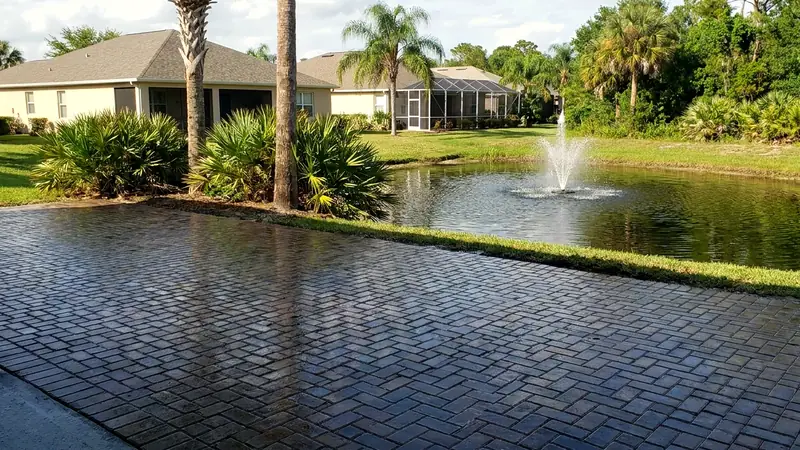
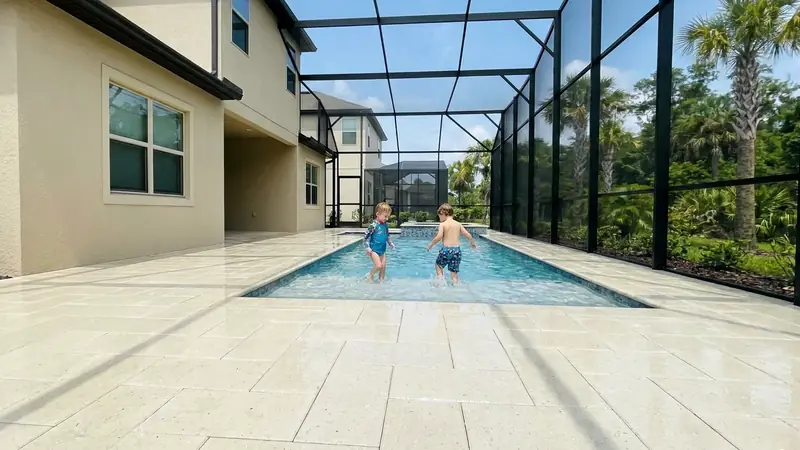
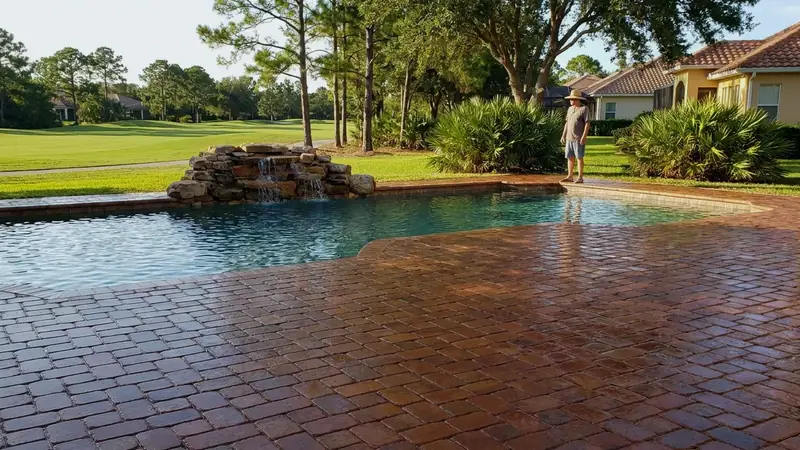
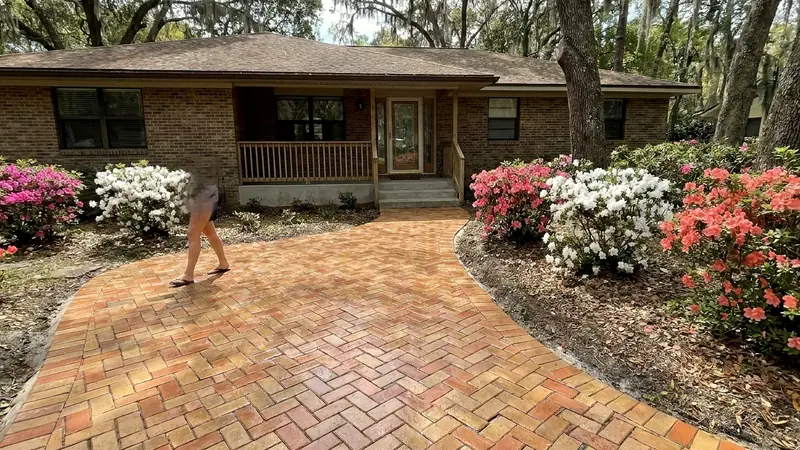
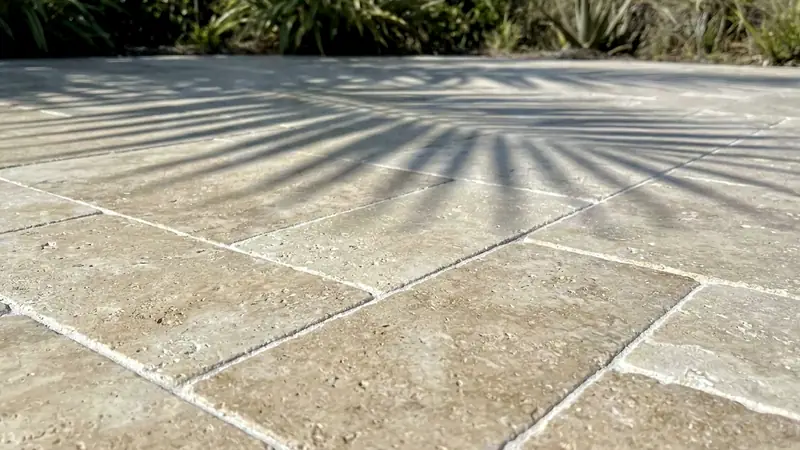
What do sealed pavers look like around Lakewood Ranch?
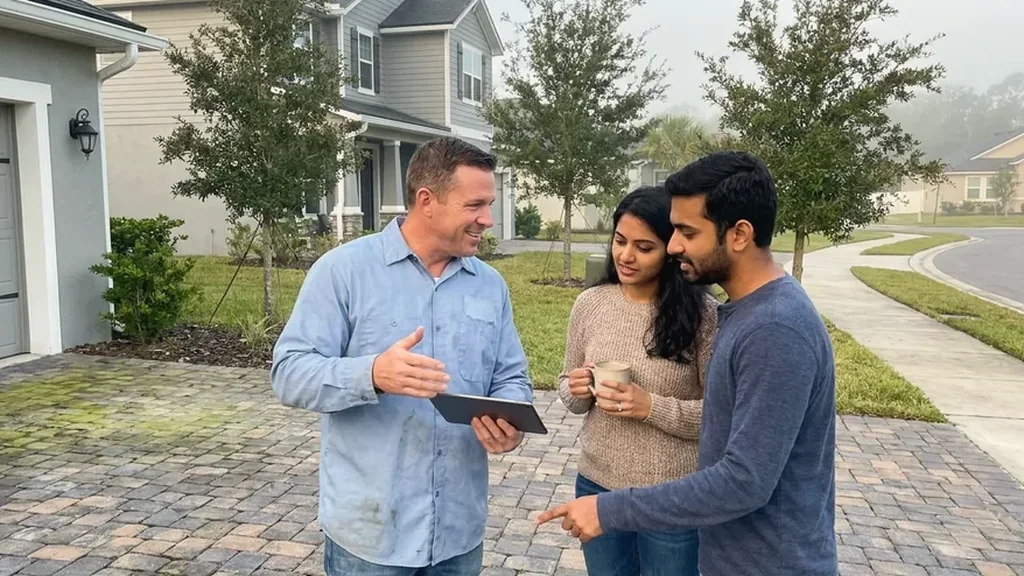
Why local matters in Lakewood Ranch
A contractor who works Lakewood Ranch knows the community grew in stages. Summerfield was completed in 1995 and later villages came after it, so coat history differs by street. That guides what to expect on your driveway. To reach someone who works these villages, call (941) 207-3213.
Local work also means knowing the weather. The Southwest Florida rainy season runs May 15 to October 15, with highs in the upper 80s to the middle 90s. A contractor here plans for hot, wet days. You can ask for a free estimate and ask how a job would be timed around the storms.
It also means knowing the wider area. Lakewood Ranch crosses the line between Manatee and Sarasota counties, and a contractor who works both sides knows the range. Ask about their experience nearby when you ask for a free estimate.
It also helps with scheduling. Main Street and the town centers draw traffic, and a contractor who works the area plans arrival times around it. That means less waiting for you. Ask about it when you ask for a free estimate.
What is Lakewood Ranch, and how did it start?
Lakewood Ranch is a master-planned community of about 35,000 acres in Manatee and Sarasota counties. John Schroeder assembled the land in 1905, and the Uihlein family bought it in 1922 for timber and cattle. The first neighborhood, Summerfield, was completed in 1995. For a driveway quote, ask for a free estimate.
The Braden River flows through the south of the community and on toward Bradenton. The community lists a medical center, Premier Sports Campus, Sarasota Polo Club and a New Home Center on Main Street. The 2020 census counted 34,877 residents. Call (941) 207-3213 to speak with a contractor.
Before the first home went up, the land was used for cattle, citrus, tree and turf farming and aggregate mining. Schroeder-Manatee Ranch moved into community development in February 1994. About 46 percent of the land has been kept for conservation and parks. To ask about your property, ask for a free estimate.
Schroeder-Manatee Ranch planned a resort called Cypress Banks in the 1980s, approved in December 1989, which never broke ground, and the first neighborhood, Summerfield, was completed in 1995. The Lakewood Ranch Stewardship District was created on June 14, 2005 and covers 23,055 acres in Manatee and Sarasota counties, with five community development districts inside it. If your village has a district or an association, ask which exterior rules apply before you ask for a free estimate.
Frequently Asked Questions
How frequently should Lakewood Ranch pavers be sealed?
A Lakewood Ranch company says most pavers benefit from resealing every two to three years, depending on exposure and wear. Another Sarasota County company says driveways hold 2 to 3 years and covered patios 3 to 4. Open sun and heavy shade both shorten that. A dull, chalky look is the sign it is time. A yearly walk around the drive tells you when the shine has gone. Check the surface each spring to judge where you stand.
What is the average cost to seal pavers in Lakewood Ranch?
Jobs run $1.50 to $3.00 per square foot, according to a regional paver company. That covers the wash, the sand and the coats. Area and condition set your Lakewood Ranch total, and the free estimate lists the measured square footage. A pool deck or lanai is priced at the same rate as the drive. The estimate is free, and it states the area in writing. Bigger layouts simply multiply the same rate.
Which sealer should go on pavers in Lakewood Ranch?
The right sealer depends on what is on the pavers now. Compatibility comes first: a water-based product will not bond over a solvent-based one, and failed sealer is stripped. Finish is a choice between matte and a glossy wet look. Ask the contractor to name the product and explain the fit. Ask the contractor to put the product name on the quote. Matte reads quiet on a large drive, while a wet look deepens color. A short test patch shows how a finish looks on your pavers.
How much does it cost to seal pavers on a large Lakewood Ranch driveway?
Price is by the square foot, so a wide driveway costs more in total at the same rate. Companies in this region publish $1.50 to $3.00 per square foot. A lanai or pool deck adds area, and the measured total tells you where you land. The measured square footage on the estimate is the number to compare between bids. A sketch of the layout on the quote makes the area easy to check. Lanai and pool deck areas are measured the same way.
Should newer Lakewood Ranch pavers be sealed right away?
Many owners wait until the surface fades or the joints thin, but sealing earlier can stabilize the joint sand. A Lakewood Ranch company says sealing reduces weed growth and shifting. A first seal is also simpler because nothing needs stripping. Fresh sand goes in first, and sealing then locks it in place. Sealing is not required, but many owners like the protection. Sealing earlier also means no stripping step later.
Can I choose the joint sand color on my Lakewood Ranch pavers?
Often yes. A Bradenton paver company offers six sand colors. The goal is to match what is already in your joints so the surface looks even. Ask to see a sample in the sun. A sample in the sun beats a color chip under a garage light. Matching the existing tone keeps repairs and new areas from showing.
Do I need to check with my community before sealing pavers in Lakewood Ranch?
It is smart to read your own community documents first, since rules differ by village and builder. A finish change is the usual concern. The contractor can describe the finish so you can compare it to your paperwork. A written copy of the product and finish helps if your paperwork asks for it. Village rules can differ, so a quick read is worth the time. Keep the written scope with your paperwork.
How soon can I park on my Lakewood Ranch driveway after sealing?
Foot traffic can usually return after about 24 hours, and vehicles after 48 to 72 hours, per a Sarasota County company. A dry surface is needed at the start, and a dry stretch afterward helps. The contractor can give exact timing after seeing your pavers. Pets and sprinklers should stay clear until the window ends. Heavy rain in that window can mean a recheck.
Ready for a Free Estimate in Lakewood Ranch?
Call (941) 207-3213 and tell us about your pavers.
Free, no obligation